Reading time: 5 minutes
With the 21st Century ROAD to Housing Act now law, this year’s Summit had a clear focus: figuring out how to turn the win into actual homes.
Opening Keynote: Celebrating the ROAD to Housing Act
Joel Albizo (CEO, American Planning Association) and Mike Kingsella (CEO, Up for Growth) opened the day by framing passage as a milestone rather than a finish line. That set up a thirty-minute fireside chat between Rep. Josh Harder (D-CA-09, Co-Chair of the Build America Caucus) and Bryan Green (Vice President of Policy and Advocacy, National Association of REALTORS). Harder talked through how the bill pulled off near unanimous margins in a polarized Congress, the tense fight to strip out a build to rent investor ban, and his own favorite provisions: CDBG reforms, building code changes, and manufactured housing. He also flagged financing and construction costs, left out of the bill, as the next big fight.
Implementing the ROAD to Housing Act
Of the bill’s 59 provisions, this panel zeroed in on the six with the most pro-housing potential, asking what has to go right for them to actually work. Panelists Will Poff-Webster (Director of Infrastructure Policy, Institute for Progress), Tushar Kansal (Senior Officer, Housing Policy Initiative, The Pew Charitable Trusts), and Andrew Justus (Housing Policy Analyst, Niskanen Center) dug into the Innovation Fund, the Build Now Act, pre-approved plan and pattern book programs, the Housing Supply Frameworks Act, and reforms to manufactured housing and single-stair construction. The consensus: passage was the easy part, agencies still have to stand these programs up, and pattern books in particular only work when cities coordinate closely with local homebuilders.
The ROAD Ahead: Building the Next Federal Housing Agenda
Closing out the summit, Hill staffers Noelle Melton (Housing and Insurance Director, House Financial Services Committee Democratic Staff), Alía Fierro (Senior Policy Advisor for Housing, Senate Banking), and Matt Mullins (Legislative Assistant, Office of Rep. Mike Lawler) looked at what got left on the cutting room floor and where the 120th Congress might go next, pointing to funding existing programs, housing finance reform, universal design for aging homeowners, and modernizing HUD programs as top priorities, while flagging appropriations, which currently gets housing less than one percent of federal spending, as the real fight ahead. They named surface transportation reauthorization, tax proposals, and other must-pass bills as likely vehicles, and audience questions pushed further into the mortgage interest deduction, local infrastructure funding, and voucher expansion.
Afternoon: Hill Briefing on What’s Next
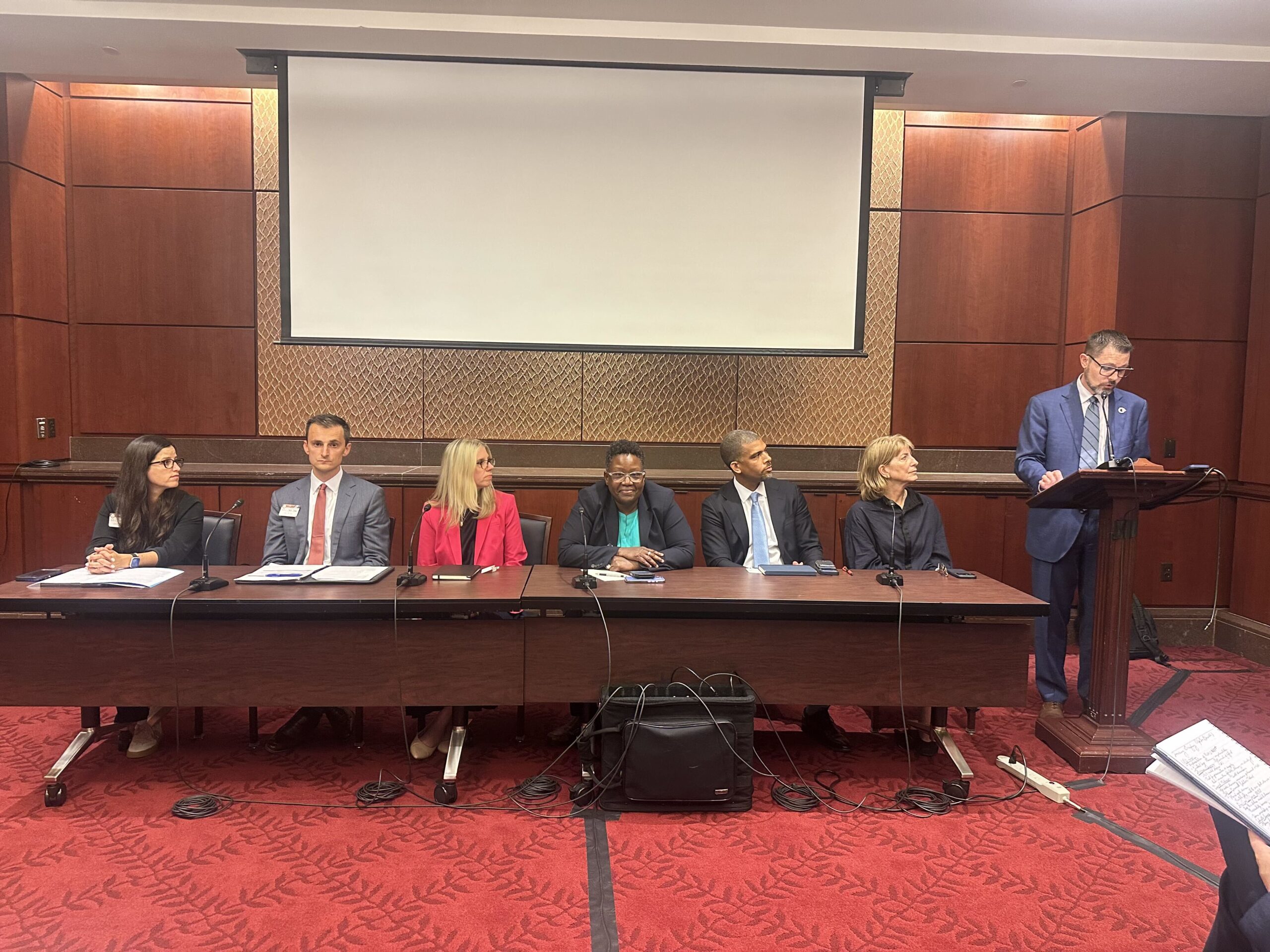
Separately, a Hill briefing brought together housing sector leaders to surface problems on the ground and float ideas for a potential “ROAD 2.0”:
- Teresa Dumais (Stewards of Affordable Housing for the Future) pushed preservation, not just new supply, citing rising insurance and utility costs straining existing affordable housing.
- David Robinson (Scott Insurance) explained why so few insurers underwrite affordable housing at all, and proposed extending the post-disaster rehousing window for tax credit properties.
- Jill Jones Borak (Grounded Solutions Network) made the case for shared equity homeownership, community land trusts and similar models that keep homes affordable resale after resale.
- Jenn Jones (AARP) spoke to older Americans stuck in homes that no longer fit, pushing for more housing variety and repair funding to help them age in place.
- David Williams (Lafayette Square Institute) pitched adapting the SBIC program, a proven small business capital model, into a faster, cheaper capital vehicle for housing developers.
- Roseanne Haggerty (Community Solutions) drew on the country’s success cutting veteran homelessness in half, proposing a similar model pairing SSI/SSDI with rental vouchers and services for people with severe disabilities.
The panel closed with a round of “magic wand” asks: a federal preservation strategy, a low-cost preservation loan fund, curbing litigation costs that drive up insurance premiums, and above all, actually appropriating the funding the ROAD to Housing Act already authorized.